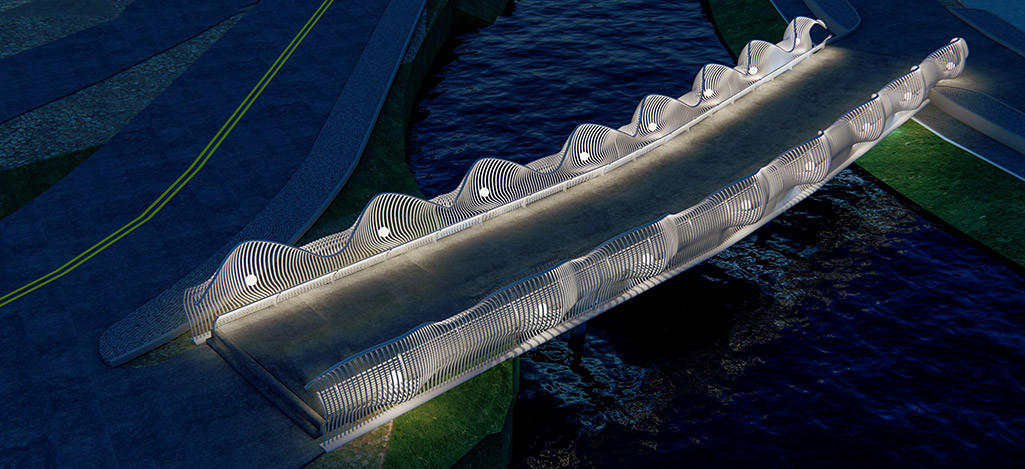
Dushanbe National Stadium Landscape Bridge Program
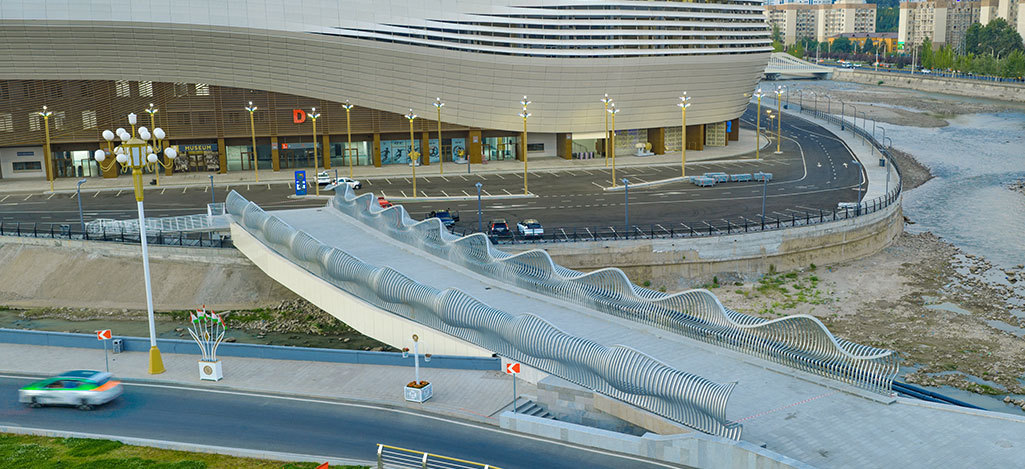
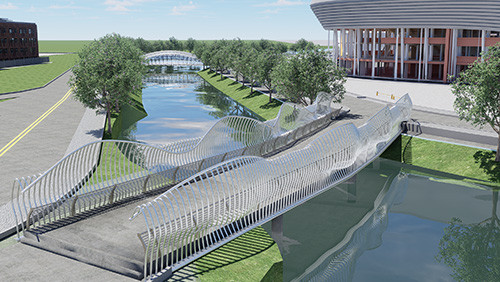
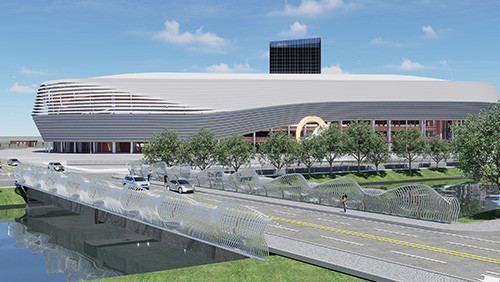
One of five landscape bridges surrounding the National Stadium in Dushanbe, Tajikistan. PFM undertook the design, decorative structure and lighting quantification works across the program, contributing to the transport and landscape upgrading of the stadium precinct for public use and future international events.
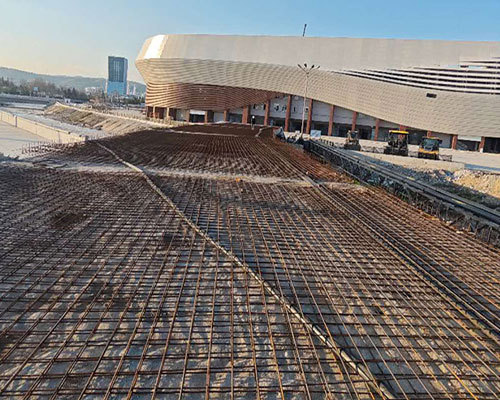
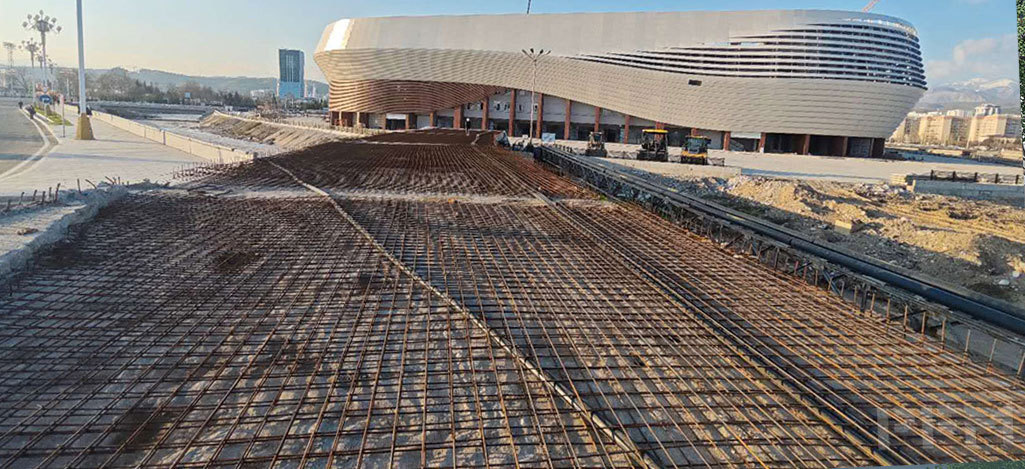
The Pearl Shell Bridge is an existing bridge dating from the Soviet era. Its original structural drawings and design documentation were no longer available, and the deck showed visible movement under heavy vehicle loading. PFM's scope therefore began with a structural assessment of the existing bridge, followed by full-deck reinforcement with steel mesh, rather than a conventional decorative retrofit.
Engineering & Construction — Bridge Reinforcement Without Original Drawings
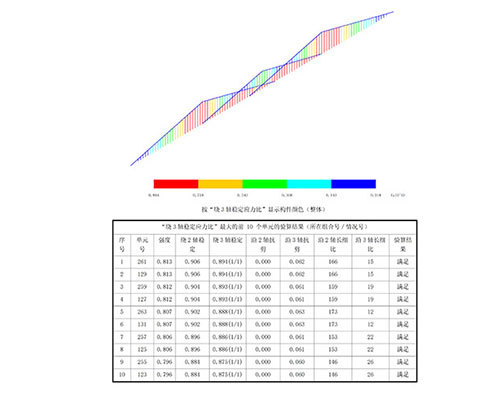
With no original design drawings available, Our engineering team developed a new reinforcement solution based on site measurements, structural modelling, and load analysis.
To ensure the integrity and stability of the deck, PFM adopted full-deck steel reinforcement mesh with interlocking anchorage.
The bridge was also reclassified for pedestrian use only, eliminating the structural risks associated with heavy vehicles.
Lighting Design — Quantified, Not Decorative Only
The lighting design balances aesthetics with precision, using carefully calculated illumination and fixture placement.
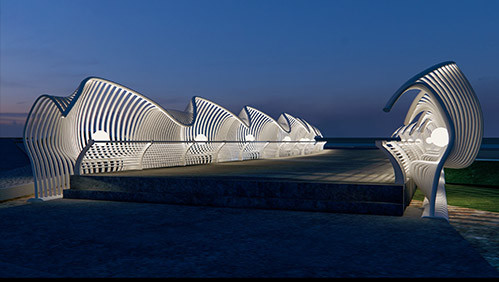
Linear wall washers follow the bridge's arched structure, creating a continuous, even wash of light that highlights its elegant shell-like form.
All cables are concealed within structural tubes or hidden from public view, leaving no exposed wiring. This attention to detail reflects the precision of the installation and the quality of the engineering workmanship.
Completed Project
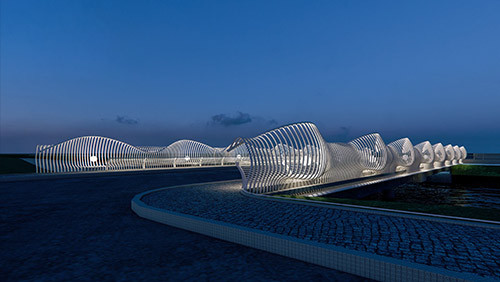
By day, the bridge reads as a clean structural arch with restrained detailing. After dark, the two lighting layers take over.
The completed bridge forms one link in a continuous sequence of five landscape bridges around the stadium, each with its own design language but sharing one set of engineering, safety and detailing standards.